My Death, My Decision has challenged Prime Minister Andy Burnham’s suggestion that assisted dying legislation should wait until palliative and social care have been reformed, warning that better care and greater choice at the end of life must not be treated as competing alternatives.
Prime Minister Andy Burnham has said that social care and palliative care should be properly funded and reformed before assisted dying legislation is introduced.
Mr Burnham has previously expressed support for the principle of assisted dying, saying in 2024 that family experiences had changed his view and convinced him that people and their families are too often allowed to suffer.
While making clear that he was not opposed to a debate on assisted dying, Mr Burnham argued that people should first have confidence that high-quality care will be available to them at the end of life.
His comments come ahead of the Second Reading of Lauren Edwards MP’s Terminally Ill Adults (End of Life) Bill on Friday 11 September 2026.
The Bill would allow terminally ill adults, subject to safeguards and protections, to request and receive assistance to end their own lives.
My Death, My Decision agrees that palliative and social care urgently need greater investment. However, improving care must not become a condition that has to be met before Parliament can consider the separate question of assisted dying.
Good palliative care can relieve pain and many other symptoms, while social care can help people live with greater comfort, independence and dignity. But neither can remove every form of suffering or provide every dying person with the control and reassurance they may need.
Better care and greater choice are not competing alternatives. A compassionate society should provide both.
Hannah Slater: “Remember who this law is for”
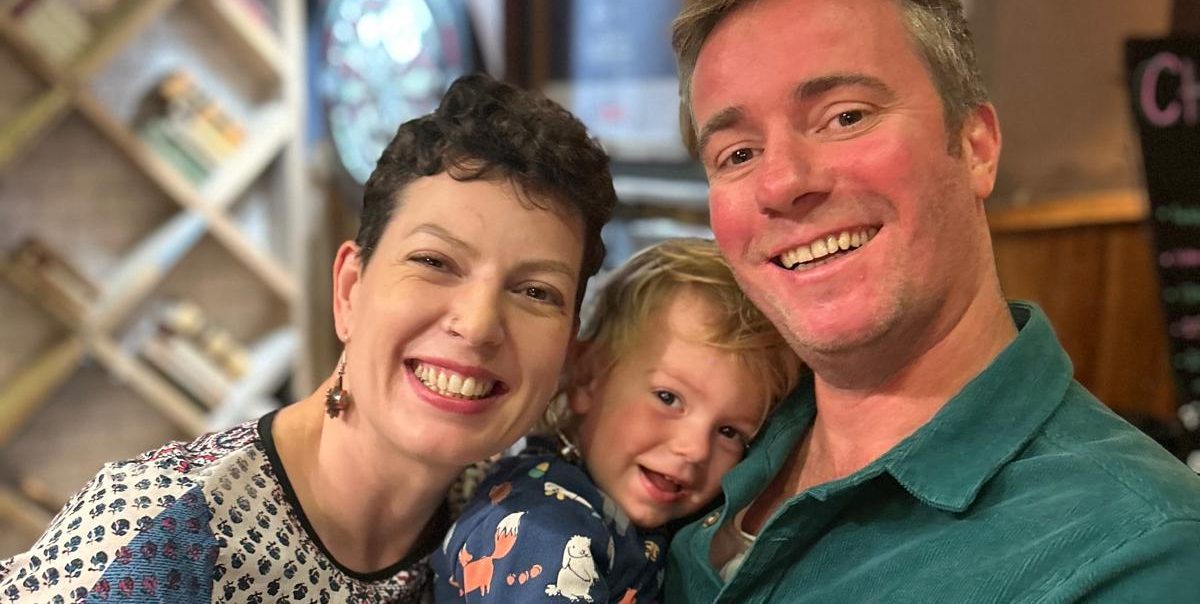
Hannah Slater, 38, has terminal cancer and a three-year-old son. Earlier this year, she was told she may have only months to live.
She said:
“I would ask Andy Burnham to remember who this law is for.
It is for terminally ill people like me, who are not asking for less care, but for the reassurance that we will have a choice if our suffering becomes unbearable.
I have already lost the sight in my left eye, and I am frightened of losing my independence, my ability to communicate and everything that makes me feel like me.
Of course palliative and social care need greater investment, but that cannot be used as a reason to make dying people wait. I do not have endless time for politics to catch up.”
Care and choice address different needs
Dr Richard Osborne, a board member of My Death, My Decision, spent 30 years as a consultant medical oncologist and cared for almost 10,000 patients, most of whom had metastatic, incurable cancer.
His clinical experience reflects a central truth in this debate: even excellent care cannot relieve every symptom or every form of suffering.
Palliative care, social care and assisted dying are not interchangeable. They respond to different needs and should exist alongside one another as part of a compassionate approach to the end of life.
Successive governments have been promising to reform social care for decades. Terminally ill people should not be told that their right to be heard must wait indefinitely for politicians to solve a separate and longstanding crisis.
Dave Sowry: “Dying people deserve both”
Dave Sowry’s wife, Christy, lived with multiple sclerosis and travelled to Dignitas in 2022 because the choice of an assisted death was not legally available to her at home.
Dave said:
“I spent years caring for my wife, so I do not need convincing of the importance of properly funded social care. I also know that good care, however compassionate, cannot answer every fear or relieve every form of suffering.
Social care helps people live well. Palliative care helps manage symptoms at the end of life. Assisted dying addresses a different and very specific question: whether a mentally competent, terminally ill adult should be forced to endure suffering they find unbearable when death is already approaching.
Presenting these as alternatives misunderstands what dying people and their families are asking for. We need better care, but we also need honesty about its limits. Funding one should never be made a condition of debating the other.”
The previous Terminally Ill Adults Bill passed through the House of Commons but ran out of parliamentary time in the House of Lords.
Lauren Edwards, the Labour MP for Rochester and Strood, secured second place in the private members’ bill ballot and has now reintroduced the legislation. Its Second Reading is scheduled for 11 September.
My Death, My Decision is calling on the Government to respect the parliamentary process and allow MPs a free and properly informed debate.
Terminally ill people cannot put their lives on hold while they wait for a perfect care system. They deserve excellent care, protection under the law and the right to have their voices heard.
Notes:
Members of the MDMD team, as well as individuals affected by the current law on assisted dying, are available for interview upon request
For further comment or information, media should contact Kerry Hogan at kerry.hogan@mydeath-mydecision.org.uk or phone 07922363248. (media only)
Media can use the following press images and videos, as long as they are attributed to “My Death, My Decision”.
My Death, My Decision is a grassroots campaign group that wants the law in England and Wales to allow mentally competent adults who are terminally ill or intolerably suffering from an incurable condition the option of a legal, safe, and compassionate assisted death. With the support of over 3,000 members and supporters, we advocate for an evidence-based law that would balance individual choice alongside robust safeguards and finally give the people of England and Wales choice at the end of their lives.