Uncategorized

MDMD Coordinator asks Baroness Finlay how to avoid late stage dementia

On 29th November 2018 Baroness Ilora Finlay gave a talk at Bristol University titled “As the light fades: Do law and ethics collide?”. Baroness Finlay is a professor of palliative medicine at Cardiff University and a long-standing prominent opponent of assisted dying. Her talk gave a full account of the problems and dangers she sees with assisted dying legislation as it exists in various countries around the world. MDMD is sympathetic to at least some of her concerns, but reaches different conclusions. In Baroness Finlay’s view no change in the law is necessary or desirable, in part because one option people already have is to refuse life sustaining medication.

In the Q&A section MDMD Coordinator, Phil Cheatle, asked a question regarding dementia, a terminal illness where sufferers do not require life sustaining medication which can be refused. Dementia is particularly important as it is feared by many people and is increasingly common. The discussion about how assisted dying can safely be made available to dementia sufferers is something which is actively being discussed and reviewed around the world. In Switzerland medical assisted suicide is permitted for those with early stage dementia provided the person still has the mental capacity to make a life ending decision at the time of the assisted death. In the Netherlands and Belgium euthanasia is permitted for those with dementia who lack mental capacity provided they have written an advance decision requesting euthanasia in those circumstances. In USA and Canada there is public debate about possibly broadening their assisted dying laws to include people suffering with dementia.

In Phil’s question to Baroness Finlay he explained that his experience of his mother’s end of life suffering from dementia taught him that he really didn’t want to die like that. He then asked:

 “What should I do to avoid an unpleasant death from dementia?”

Baroness Finlay started by saying that with dementia a patient doesn’t have mental capacity. Phil clarified that he was thinking of early stage dementia before mental capacity was lost. Baroness Finlay then said “Putting it bluntly, there’s no law against committing suicide.” Phil responded by asking how people should do this without access to appropriate medication. She replied by saying that “there are people ordering drugs over the internet now and taking overdoses”, though she was very clear that she was not suggesting that people should do this. Phil followed up by pointing out that this was highly risky, and that you can’t be sure what you are buying. Surely there must be a safer way to ensure people have a good death?

Baroness Finlay then explained that if society were to decide that lethal medication was to be legally obtainable within the UK, then there would need to be a body which brought a set of different skills together to ensure safeguards were followed. She mentioned clinical psychologists, for example, to assess the person’s mental state. She questioned whether the medical profession should be involved at all, saying “why is it a medical duty, if you want to commit suicide and you have early dementia and you have capacity, then why is it a medical duty to supply you with lethal drugs? And if the law is going to change, why not have other groups in society assess you, people who can legitimately make sure that you’re not being coerced, that you’re not being pressurised?”

Reflecting on her answer afterwards, Phil Cheatle said: “It is very surprising that Baroness Finlay answered my question by saying that ‘there’s no law against committing suicide’, as if that were an acceptable answer to the very real concern that I raised. Surely palliative care should be able to offer something more compassionate, while respecting the person’s end of life wishes? Feeling the need to take one’s own life, without the opportunity for professional help in evaluating if that is really the best death possible, and without safe access to appropriate methods, is something MDMD wants to avoid. The MDMD website lists many reasons why taking your own life, unaided, is dangerous and unacceptable.”

“MDMD shares Baroness Finlay’s desire for strong, effective and workable safeguards in any assisted dying legislation. We welcome any opportunity for constructive discussion about the nature of the regulatory body she suggested. This approach may be a way forward to break the current impasse between the medical, legal and political positions. However, MDMD would prefer assisted dying to be closely integrated with palliative care, as happens in parts of Belgium, as this would help ensure that all palliative options were considered before choosing a medically assisted death.”

[Updated 18th May 2019 after MDMD was given access to a transcript of the discussion of Phil’s question which enabled a more accurate reflection of the views Baroness Finlay expressed.]

Read more

Is “Mercy Killing” ever the right thing to do?

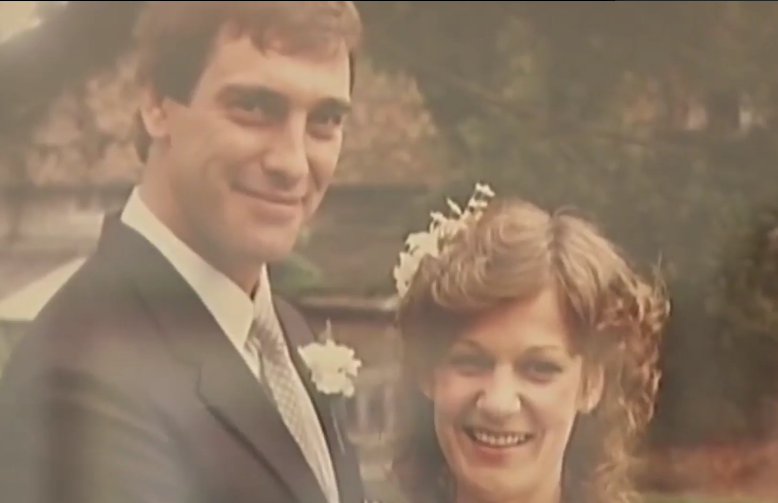
The BBC, and a number of newspapers, (see the Ayrshire Post), report the story of Ian Gordon who smothered his wife of 46 years with a pillow as “a final act of love” to relieve her pain and suffering. Did he do the right thing?

The judge’s explanation in sentencing, though interesting, doesn’t really help. The judge may well be doing his job to the best of his ability, implementing the law within the bounds he is permitted. But cases like this are complex and, (MDMD believe), indicate a failing in the law itself, rather than its application. The original charge of murder which Mr Gordon faced was reduced to culpable homicide, on the basis of diminished responsibility, at an earlier hearing.

The court heard that Mr Gordon’s wife did not want to be treated for her health problems because she was afraid of hospitals. Her family report her suffering excruciating pain immediately prior to her death. This is the first complexity – the possibility for treatment and pain relief, and even professional diagnosis was apparently refused. This was Mrs Gordon’s right, but it makes the situation harder for everyone else when it causes desperate actions, however well intentioned.

Did she actually ask to be killed? And if she did, was it her own, well considered and persistent wish, made when she had sufficient mental capacity? No verbal or written request is recorded, though apparently the couple had a “death pact” between themselves. There were, of course, no independent professional witnesses to this.

Had all alternative options been explored? For example, could increasing levels of pain relief have been given at her home, possibly including terminal sedation? To what extent might these have provided a good death, or at least a better death, for this unfortunate lady?

Mrs Gordon’s daughter explained that her mother had a history of suffering from anxiety and depression. To what extent did this exacerbate the situation? Was it resistant to all possible treatments?

In cases like this, without the possibility of legal medically assisted dying, these questions cannot be satisfactorily answered. In the most important sense, it is too late to ask after the person concerned – and primary witness – has been killed, or has taken their own life. It is only when a formal legal process for assisted dying is available,and someone has requested this, that proper investigations can be made before the death, and the secrecy and anguish of well-meaning but possibly misdirected illegal actions can be avoided.

MDMD Coordinator, Phil Cheatle, says, “I have been in a similar, very difficult situation to Mr Gordon, so I have every sympathy with him and his actions. On balance, I decided to refuse my mother’s requests to help end her life when I had a similar opportunity, but perhaps my mother’s suffering was not as great as Mrs Gordon’s. However, seeing my mother in pain, and her personality slowly disintegrating due to dementia, was dreadful, both for her and for those who knew the person she had been. We need a change in the law to prevent tragedies like this – whichever decision people like Mr Gordon, or me, take.”

What sort of assisted dying legislation would have avoided the Gordon’s tragedy and others like them? Fundamentally a law which respects a dying person’s well informed and well considered wishes, and which gives them some control over the timing of their death. However, for the protection of vulnerable people and the wider society, such a law needs to place strong requirements on the person seeking assistance to die. For someone to take advantage of such a law, they would have to agree to many examinations and consultations with multiple trained professionals. At the very least these professionals would need to ensure:

  • that the requestor was incurably and unacceptably suffering from a condition that was highly unlikely to improve;
  • that the requestor considered an assisted death to be the best option available for them, having carefully considered all other available options, and the likely future quality of life they could expect;
  • that the requestor had sufficient mental capacity to take a life-ending decision;
  • that the requestor’s decision was consistent over a period of time;
  • that the requestor had instigated the request themselves and had not been coerced into their decision.

It is not clear whether Mrs Gordon would have agreed to the process, or would have met conditions like these, had the option been available. This makes this case particularly difficult. It surely cannot be correct for others, (in particular those who are emotionally involved, and not medically qualified), to make a life ending choice on behalf of another, however well-intentioned and compassionate their motives. The only exception is in the situation of doctors making a best-interests decision to stop further treatment in cases they deem hopeless, or following a patient’s advance decision to refuse treatment. Our sympathy with the actions of Mr Gordon is precisely because there didn’t appear to be better alternatives available to him and his wife. With better alternatives, his actions would have been unacceptable.

An appropriate law would make the situation much clearer to those who wanted to do their best to help their loved ones to have a good death. If someone like Mrs Gordon had sought professional help – knowing that help to die would be available when needed… If she had put on record, many years before hand, her desire for the option of an assisted death if she ever reached a point in later life where she deemed it necessary… Then there would be no excuse for people to take drastic, illegal and dangerous action themselves, and as a result society, (and in particular, vulnerable people), would be safer.

Mr Gordon told his daughter “I don’t have a single regret.” His whole family and many character referees, appear to back his decision to kill his wife out of compassion. A law that makes people feel they have to take the law into their own hands to “do the right thing”, due to lack of appropriate legal choices, is fundamentally a bad law and needs to be changed. This failure of the current law to provide a more compassionate option, is made worse, in this case, by compounding the tragedy of the violent death of a much loved wife and mother, with another tragedy of a jail sentence imposed on a caring husband, driven to break the law due to lack of an acceptable alternative.

The case is not an isolated incident. For example, earlier this year a man who attempted to kill his wife to end her suffering was given a suspended manslaughter sentence. How many more cases of successful or attempted mercy killings, assisted suicides, and people taking their own life do we have to endure before we get more compassionate laws – throughout the UK? How many more tragic events like these go undetected, or under reported?

Update 19th March 2018:

Scottish Legal News reports that the custodial sentence of Ian Gordon has been quashed on appeal – leaving Mr Gordon with an admonition. The full ruling is here. It appears that the appeal court decided that the original  sentence was inappropriate as insufficient weight had been given to psychiatric reports on Mr Gordon which indicate that he “was suffering an abnormality of mind” which rendered him “unable by reason of mental disorder to appreciate the nature or wrongfulness of any conduct”. Good news for Mr Gordon and his family, but it further emphasises the need for a change in the law to avoid these dreadful, unsafe situations in the first place. We need to allow the option for a medically assisted death under carefully controlled circumstances, in order to remove the need for desperate actions by apparently compassionate, well-meaning, people who are “suffering an abnormality of mind” which leaves them “unable … to appreciate the nature or wrongfulness of any conduct”. Where are the safeguards in that? Where is the careful, objective, consideration from impartial experts – before the (possibly vulnerable) person has died?

Read more