Uncategorized

Police fail to detect up to 30% of assisted deaths, new research finds

At least 3 in 10 people who travel to Switzerland for assisted deaths are unknown to the authorities, according to new research by the campaign group My Death, My Decision. Campaigners have said the findings raise serious questions about the current law’s effectiveness, and underlines the need for a fresh Parliamentary inquiry into assisted dying. 

Figures disclosed under the Freedom of Information Act show that between 2015 and 2019, a total of 156 crimes for aiding suicide were recorded by police forces across England and Wales. However, data from the Swiss assisted dying facilities Dignitas and Lifecircle, show that over the same period 225 people from England and Wales travelled to Switzerland and ended their lives – meaning at least 3 in 10 people were not recorded. 

In normal times, the UK Assisted Dying Coalition estimates that at least one Brit travels to Switzerland to end their life every week. 

The release of these figures come after Henry Marsh – one of the UK’s leading brain surgeons, bestselling authors, and patron of My Death, My Decision – has called for an urgent inquiry into assisted dying after revealing he has advanced prostate cancer. His call for an inquiry has been backed by more than 50 MPs and peers from different political parties, some of whom previously voted against changing the law.

Responding to the release of these new figures, My Death, My Decision’s Chair Trevor Moore said:  

‘These new figures show that the UK’s law banning assisted dying does not protect potentially vulnerable people, but relies upon safeguards in Switzerland instead. They raise serious questions about the current law and its potential for abuse, because the UK Government cannot protect people they don’t know exist.’ 

‘At least one person a week now travels from the UK to Switzerland to end their life. During such an emotionally fraught period, a compassionate law would allow someone’s friends and family to come to terms with the death of their loved one without the threat of prosecution hanging over them. But instead, our law necessitates a culture of secrecy and deception – resulting in those accompanying loved ones abroad often doing so without any UK oversight. Meanwhile, progressive countries around the world continue to show that a regulated system of upfront safeguards is the best way to protect everyone.’

‘It is time for Parliament to scrutinise the UK’s outdated and broken laws on assisted dying, by launching a long overdue inquiry into the law. This would enable politicians to examine ill-founded claims, hear evidence from around the globe, and reach an informed decision about changing our law.’ 

Notes:

For any more information or comment please contact My Death, My Decision’s Campaigns and Communications Manager at campaigns@mydeath-mydecision.org.uk.

Read My Death, My Decision’s research at least three in ten assisted deaths are unknown to the police. 

Methodology 

In 2019 and 2020, My Death, My Decision sent a Freedom of Information request to all 43 territorial police authorities in England and Wales. The request was for the number of recorded crimes, arrests, and individuals charged for assisting another to die under the 1961 Suicide Act between 2015 and 2019; or recorded under the Home Office’s codes for assisted suicide. The total number of recorded crimes was then compared against figures held by the Swiss organisations Dignitas and Lifecircle for the number of people in England and Wales who ended their life in Switzerland, over the same period. 

Data

36 out of 43 territorial police authorities in England and Wales responded to My Death, My Decision’s Freedom of Information Requests in 2020. 41 out of 43 police authorities responded to My Death, My Decision’s Freedom of Information Requests in 2019. Overall, the total recorded crimes between 1 January 2015 and 31 December 2019 for assisting another to end their life was 156. According to Dignitas and Lifecircle, the total number of people from England and Wales who ended their life between the same period was 225. 

3 in 10 is likely to be a conservative estimate since the number of recorded crimes from the police included assisted deaths that occurred both in the UK and abroad. Thus, the true number of people travelling to Switzerland without the police’s knowledge may be even higher. 

About My Death, My Decision

Read more about My Death, My Decision’s campaign for an inclusive change in the law: https://www.mydeath-mydecision.org.uk/

My Death, My Decision is a grassroots non-profit organisation that campaigns for a balanced and compassionate approach to assisted dying in England and Wales. As a growing movement, we are at the forefront of social change: nearly 90% of the public now favours a change in the law to allow adults of sound mind, who are either terminally ill or facing incurable suffering, the option of a peaceful, painless, and dignified death.


Read more

50+ MPs and peers and MDMD patron Henry Marsh, after cancer diagnosis, call for assisted dying inquiry

Credit: Paul Jenkins, licenced under creative commons 2.0 (https://bit.ly/3beuuty)

Henry Marsh, a leading neurosurgeon and patron of My Death, My Decision, has called for an ‘essential’ inquiry into assisted dying.  He has been prompted by a cancer diagnosis, and been backed by a group of 56 MPs and peers who have sent a joint letter to Justice Secretary Robert Buckland, calling for an inquiry. The letter was organised by My Death, My Decision and Humanists UK. 

The MPs and peers come from the Conservatives, Labour, Liberal Democrats, SNP, Green Party, and the Crossbenchers, and include some who had previously voted against changing the law.

The letter notes the large scale BMA poll of doctors which found half of doctors personally support a change in the law, and a broad form of assisted dying inclusive of those who are incurably suffering as well as those who are close to death. Many jurisdictions, including Canada and New Zealand, have introduced, or are considering assisted dying legislation. 

Speaking about his diagnosis, Henry Marsh said: 

‘Having spent a lifetime operating on people with cancer, the prospect of dying slowly from it myself fills me with dread. Despite the best efforts of palliative medicine, I know that dying from cancer can still be a very horrible business – for both patient and family, despite what the opponents of assisted dying claim.’

‘I fiercely believe that if people in my situation knew they had the ability to choose how, when, and where they would die, it would greatly reduce their suffering. Knowing that I had this choice, if life became unbearable, would certainly give me much greater confidence now in facing whatever the future might hold for me. But as the law stands, I am not allowed this comfort, and the law insists instead that I must suffer. Many politicians have shown a striking lack of compassion by ducking this issue for too long, and are inadvertently guilty of great cruelty. Irrespective of your view on assisted dying, I would hope everyone could agree that our laws should be based on evidence and informed decisions, not alarmist, unfounded opposition that flies in the face of all the evidence from countries where assisted dying has been legalised. It’s time for all MPs to start taking this issue seriously and I urgently call upon them to undertake an inquiry into the law.’

My Death, My Decision’s Chair Trevor Moore commented: 

‘Henry Marsh is a strong and vocal supporter of MDMD’s campaign. I am deeply sorry to hear of his illness and the difficult decisions he now faces which are made harder by the cruel UK law that denies him the option of a compassionate assisted death. An inquiry is essential to allow evidence to be gathered from all sides of the debate.’

‘The letter Dr Marsh has helped bring about is incredibly significant as it demonstrates the growing sentiment among parliamentarians for considering a broad assisted dying law which will apply to those who are incurably suffering as well as those who are terminally ill. The government has already recognised the weaknesses associated with time-limited definitions of “terminal illness” in relation to benefit claimants. The focus now needs to move beyond the narrower version of assisted dying which is limited to those with a life expectancy of six months or less. More and more people are realising the limitations of that approach. Instead, the UK should carefully examine the growing evidence of the broader, more compassionate approach, adopted by Canada and other countries.’

Notes:

For any more information or comment please contact My Death, My Decision’s Campaigns and Communications Manager at campaigns@mydeath-mydecision.org.uk

Read Humanists UK’s and My Death, My Decision’s open letter. 

About Henry Marsh

Henry Marsh, 71, has been diagnosed with prostate cancer and an advanced PSA score typically associated with stage 3 and 4 cancer. The typical mortality rate for those in this situation is between one and five years.

Joint Parliamentary Letter

The letter has been signed by 56 MPs and peers, including the two co-chairs of the All Party-Parliamentary Humanist Group Crispin Blunt MP and Baroness Bakewell, as well as Aaron Bell MP, Lord Haworth, Lord Aberdare, Lord Dubs, Lord Turnbull, Andy Slaughter MP, Baroness Mallalieu, Baroness Taylor, Lord Young of Norwood Green, Beth Winter MP, Caroline Lucas MP, Christine Jardine MP, Chris Law MP, Clive Betts MP, Clive Lewis MP, Lord Soley, Lord Low of Dalston, Lord Lipsey, Lord Stevenson of Coddenham, Baroness Warwick of Undercliffe, Duncan Baker MP, Baroness Murphy, Lord Judd, George Howarth MP, Huw Merriman MP, Baroness Whitaker, Baroness Jones of Moulsecoomb, Baroness Tonge, Lord Purvis of Tweed, Lord Maxton, the Earl of Sandwich, the Duke of Somerset, Lord Barker of Dorking, Kevin Hollinrake MP, Baroness Burt, Margaret Hodge MP, Lord Rees, Viscount Ridley, Lord Desai, Lord Dobbs, Baroness Bennett of Manor Castle, Lord Dholakia, the Earl of Clancarty, Lord Warner, Rachel Hopkins MP, Baroness Lister, Baroness Brinton, Baroness Greengross, Baroness Hamwee, Steve McCabe MP, Lord Elder, Tommy Sheppard MP, Tracey Crouch MP, and Lord Davies of Stamford.

Read more about My Death, My Decision’s campaign for an inclusive change in the law: https://www.mydeath-mydecision.org.uk/

My Death, My Decision is a grassroots non-profit organisation that campaigns for a balanced and compassionate approach to assisted dying in England and Wales. As a growing movement, we are at the forefront of social change: nearly 90% of the public now favours a change in the law to allow adults of sound mind, who are either terminally ill or facing incurable suffering, the option of a peaceful, painless, and dignified death.
Read more

Spain legalises assisted dying

Spain is now the fourth European country to adopt an assisted dying law that permits a medically assisted death to those who are terminally ill or incurably suffering, after Switzerland, Netherlands, Belgium and Luxembourg. The Spanish parliament passed the bill on 18th March 2021 with 202 votes in favour, 141 against and two abstentions. Like the UK, Spain has strong public support for the change.

To be eligible under the new law someone must ‘suffer a serious or incurable disease or a serious or chronic condition,’ which causes them ‘intolerable suffering.’ The drugs used to cause the assisted death can be administered either by the patient themselves or by their doctor. This is in line with legislation in Canada, Netherlands, and Belgium.

There are strong safeguards built into the legislation. The process is initiated by a written request by the patient, expressing their clear wish to end their life. The patient must be a Spanish national or a legal resident and must be ‘fully aware and conscious’ when making the request. The request must be re-submitted 15 days later. The patient must have been supplied with information about their medical condition and the alternatives that are available to them. 

Once the second request has been made, the application is passed to a regional commission. They will appoint two professionals who have no connection with the case to review the application. On the basis of their conclusions, the commission will then approve or reject the case. The decision must be reached within 19 days. The overall process could therefore take over a month. The regional commissions will consist of at least seven people, including medical, legal and nursing experts. 

The patient may change their mind at any time. Once authorisation is granted, the patient can delay their assisted death as long as they want.

MDMD’s Lead Campaign Commentator, Phil Cheatle commented:

‘The Spanish Assisted Dying law brings the option of a peaceful assisted death to another 47 million people. The Spanish law applies to those who are incurably suffering, regardless of their life expectancy. MDMD welcomes this as it will apply to many people whose long term incurable suffering would be ignored by a more restrictive law, like that in Oregon, which limits an assisted death to those with a life expectancy of six months or less.’

‘Simply knowing that they have the option of an assisted death if they need it will enable many to have a better death, even if they find they don’t need to take up the option. Knowing that the option is there will enable others to delay their assisted death as long as they wish, as opposed to travelling to Switzerland for a medically assisted death, or ending their life themselves while they still can.’

‘In the UK we urgently need an inquiry into how to make the UK law more compassionate. MPs need to look carefully at the example of countries like Spain and Canada.’

Notes:

For any more information or comment please contact My Death, My Decision’s Campaigns and Communications Manager at campaigns@mydeath-mydecision.org.uk

Read more about My Death, My Decision’s campaign for an inclusive change in the law: https://www.mydeath-mydecision.org.uk/

My Death, My Decision is a grassroots non-profit organisation that campaigns for a balanced and compassionate approach to assisted dying in England and Wales. As a growing movement, we are at the forefront of social change: nearly 90% of the public now favours a change in the law to allow adults of sound mind, who are either terminally ill or facing incurable suffering, the option of a peaceful, painless, and dignified death.

Read more

Human Rights Act review must not undermine fundamental freedoms, warns My Death, My Decision

My Death, My Decision has counselled against proposals to water down the Human Rights Act 1998, in response to a consultation from a review panel set up by the Government. 

In its submission to the Independent Human Rights Act Review, My Death, My Decision highlighted that among the Act’s many achievements, human rights were pivotal to the ‘creation of clear and prospective prosecution guidelines on assisted dying’.

Drawing on the example of Nicklinson – where a majority of the UK’s top judges said the UK’s law on assisted dying interfered with human rights, but then stopped short of formally declaring the law incompatible, to give Parliament an opportunity to change it first – My Death, My Decision also challenged suggestions that the courts should provisionally flag up more human rights abuses for Parliament to solve, rather than addressing them themselves. 

Trevor Moore, Chair of My Death, My Decision who want to change the UK’s laws on assisted dying said: 

‘Whilst it isn’t perfect, the Human Rights Act 1998 is essential because it provides a means of challenging unjust behaviour, and holding those in power to account. In the case of assisted dying, the Act has been instrumental in enabling those who are terminally ill and incurably suffering to fight for a right to die, and push the UK towards a fairer and more compassionate law.’ 

Notes:

For any more information or comment please contact My Death, My Decision’s Campaigns and Communications Manager at campaigns@mydeath-mydecision.org.uk.

Read My Death, My Decision’s response to the Independent Human Rights Act Review: https://www.mydeath-mydecision.org.uk/wp-content/uploads/2021/04/Independent-Human-Rights-Act-Review-1.pdf 

My Death, My Decision is a grassroots non-profit organisation that campaigns for a balanced and compassionate approach to assisted dying in England and Wales. As a growing movement, we are at the forefront of social change: nearly 90% of the public now favours a change in the law to allow adults of sound mind, who are either terminally ill or facing incurable suffering, the option of a peaceful, painless, and dignified death.

Read more about My Death, My Decision’s campaign for an inclusive change in the law: https://www.mydeath-mydecision.org.uk/


Read more

My Death, My Decision responds to Republic of Ireland’s Death with Dignity Bill consultation

My Death, My Decision has informed Irish lawmakers it strongly supports proposals to legalise assisted dying for the incurably suffering in Ireland. In response to a consultation on the Death with Dignity Bill – which if passed, will enable Northern Irish citizens to access an assisted death by travelling to the Republic – MDMD said it welcomed the Bill’s forward-thinking principles and inclusive eligibility criteria. 

Under the proposed legislation, doctors would be able to help both Northern Irish and Republic of Ireland citizens suffering from ‘an incurable and progressive condition which cannot be reversed by treatment’ end their lives, provided a request is made freely and without coercion. Importantly, the eligibility criteria do not include a requirement that the applicant has six or fewer months left to live. This reflects a growing international movement away from laws based on the ‘life expectancy’ model.

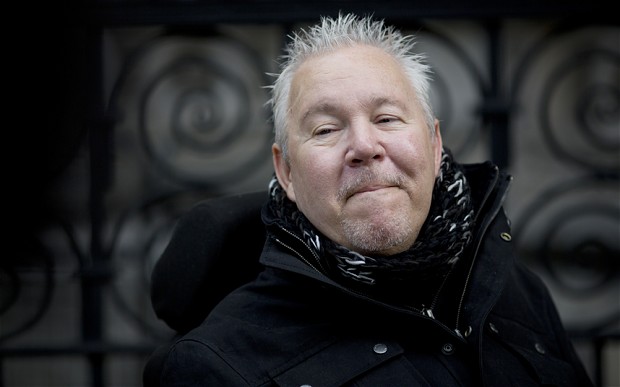
 In its response to the consultation, MDMD – responding on behalf of its members and supporters in Northern Ireland – praised the Bill’s framework for striking ‘a sensible balance between respecting the wishes of those who are terminally ill (and incurably suffering), and ensuring a robust system of safeguards’. Further cautioning that narrower the eligibility criteria could ‘prove arbitrary and unworkable in practice’, risk putting Ireland out-of-step with international best practice, and discriminating against those with incurable and intolerable conditions such as Paul Lamb

My Death, My Decision’s Chair Trevor Moore said: 

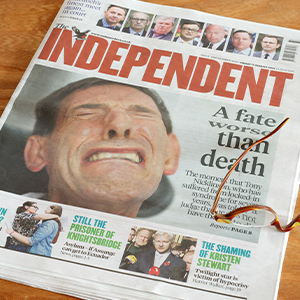
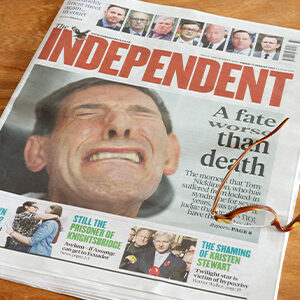
‘Advances in modern medicine mean it is now possible to extend the length of someone’s life further than ever before. But unfortunately, many more people are also suffering unnecessarily for longer before they die. For hundreds of people like Tony Nicklinson or Paul Lamb, bans on assisted dying are therefore tantamount to sentences of unyielding and inhumane suffering.’ 

‘By choosing to confront this injustice and square up to its consequences, Ireland has set an example we urge British lawmakers to heed. At the core of Ireland’s prospective law, there is a simple principle: people who suffer in the same way and seek the same degree of choice over when to end their life deserve the same dignity and respect as those with six or fewer months left to live. We strongly commend this progressive principle, and call on everyone who believes in reason, compassion, and empathy to support this bill.’

Notes:

For any more information or comment please contact My Death, My Decision’s Campaigns and Communications Manager at campaigns@mydeath-mydecision.org.uk.

Read My Death, My Decision’s full response to the House of the Oireachtas, Committee on Justice: Death with Dignity Bill 2020 consultation: https://www.mydeath-mydecision.org.uk/wp-content/uploads/2021/04/The-Committee-on-Justice_-Death-with-Dignity-Bill-2020.-1.pdf

My Death, My Decision is a grassroots non-profit organisation that campaigns for a balanced and compassionate approach to assisted dying in England and Wales. As a growing movement, we are at the forefront of social change: nearly 90% of the public now favours a change in the law to allow adults of sound mind, who are either terminally ill or facing incurable suffering, the option of a peaceful, painless, and dignified death.

Read more about My Death, My Decision’s campaign for an inclusive change in the law: https://www.mydeath-mydecision.org.uk/


Read more

MDMD calls for Northern Ireland’s Bill of Rights to include a right to die

My Death, My Decision has urged lawmakers in Northern Ireland to recognise a right to die, as part of the Assembly’s efforts to expand human rights protections. In its response, MDMD said that people in Northern Ireland are ‘uniquely disadvantaged within the United Kingdom at the end of their life’, and that the forthcoming Death with Dignity Bill in the Republic of Ireland – which will enable legal assisted dying – was poised to create an unacceptable difference in the rights at the end of life for those living north and south of the border.  

In its response, MDMD drew upon the expert evidence of Professor A.C. Grayling, a Patron of the organisation, to demonstrate that the right to control one’s life covers all aspects of living. Further, adding that since the process of dying is still a lived experience, people should be free to control the manner and circumstances of their own death. 

It concluded by stating that forcing someone ‘to continue living a life that [they have] deemed to be intolerable is an unjustified violation of their fundamental right to autonomy’, and that as part of Northern Ireland’s investigation into having ‘more rights’ it should take a leading stance by legalising a right to die.  

 My Death, My Decision’s Chair Trevor Moore said: 

‘With those in the Republic of Ireland seemingly poised to gain a choice over how, where, and when they die, we commend Stormont’s determination to continue expanding the frontier of human rights protections. Few issues are more appropriate for inclusion within a new Bill of Rights than assisted dying.’

‘Forcing someone who is enduring constant and unbearable pain to continue living against their will is wrong. It’s cruel, inhumane, and needs to change. More than 340 million people around the world have access to the option of a legal assisted death – reflecting that changes in the law can be achieved in a safe and compassionate manner. We urge Northern Ireland’s Assembly not to pass up this rare opportunity, and listen to the voices of those who are terminally ill and incurably suffering by recognising a right to die.’

Notes:

For any more information or comment please contact My Death, My Decision’s Campaigns and Communications Manager at campaigns@mydeath-mydecision.org.uk.

Read My Death, My Decision’s full response to the Ad Hoc Committee on a Bill of Rights for Northern Ireland here: https://www.mydeath-mydecision.org.uk/wp-content/uploads/2021/04/The-Ad-Hoc-Committee-on-A-Bill-of-Rights-For-Northern-Ireland.-1.pdf

My Death, My Decision is a grassroots non-profit organisation that campaigns for a balanced and compassionate approach to assisted dying in England and Wales. As a growing movement, we are at the forefront of social change: nearly 90% of the public now favours a change in the law to allow adults of sound mind, who are either terminally ill or facing incurable suffering, the option of a peaceful, painless, and dignified death.

Read more about My Death, My Decision’s campaign for an inclusive change in the law: https://www.mydeath-mydecision.org.uk/

Read more

Portugal’s Parliament passes assisted dying bill

Portuguese lawmakers have voted in support of legal assisted dying for the incurably suffering, making a change in the law one step closer to reality. My Death, My Decision has welcomed the move as a historic step forward in the predominantly Catholic country, and said it will now add renewed pressure on the UK to follow suit. 

Under the proposed legislation, doctors could soon be able to assist or directly enable adults with ‘extreme suffering and irreversible damage’ to end their lives, provided the person makes the request free from coercion. 136 Portuguese lawmakers voted in favour of the proposals, with 78 voting against and 4 abstentions. The move follows shortly after Spanish lawmakers voted to approve similar proposals in late 2020. 

Having passed approval in Parliament, the Bill will now be considered by Portugal’s President who could either veto it, pushing the proposals back to Parliament, send it for consideration to the Constitutional Court, or enact the Bill into law. 

My Death, My Decision’s Director Claire Macdonald said: 

‘This is a decisive step forward in the international campaign for legal assisted dying, as it shows a respect for personal autonomy cuts across both religious and political ties. It is also significant for adding weight to the growing international consensus that assisted dying should not depend upon a specific life prognosis, but rather an individual’s quality of life’. 

Notes:

For any more information or comment please contact My Death, My Decision’s Campaigns and Communications Manager at campaigns@mydeath-mydecision.org.uk.

My Death, My Decision is a grassroots non-profit organisation that campaigns for a balanced and compassionate approach to assisted dying in England and Wales. As a growing movement, we are at the forefront of social change: nearly 90% of the public now favours a change in the law to allow adults of sound mind, who are either terminally ill or facing incurable suffering, the option of a peaceful, painless, and dignified death.

Read more about My Death, My Decision’s campaign for an inclusive change in the law: https://www.mydeath-mydecision.org.uk/

Read more

Austrian court overturns ban on assisted dying

Austria’s constitutional court has ruled a ban on helping ‘seriously ill’ people ending their own lives is unconstitutional, in a landmark ruling which has been welcomed by My Death, My Decision

The case relates to a claim brought by a series of claimants, including a 56-year-old man who suffers from multiple sclerosis. Under Austria’s criminal code anyone who helped someone end their life could have faced up to five years imprisonment

But on Friday, Austria’s top court ruled that the existing law is unconstitutional and that ‘it violates the right to self-determination, because this fact forbids any kind of assistance under any circumstances’; echoing the decision to similar effect made in Germany earlier this year. Notably, the court drew a comparison with the right to refuse life-sustaining medication or other interventions under an advance decision and said that, from a fundamental human rights point of view, there was no difference between that and wanting to end your life by suicide. The key criterion is that the decision is made of the person’s own free will, without coercion.

The ruling means that assisting someone to end their life will not always be a criminal offence in Austria, and it is expected that its Parliament will now debate the matter. The repeal of the relevant law in Austria will come into force on 31st December 2021.

My Death, My Decision’s Chair Trevor Moore said:

‘In 2020 we have seen many countries around the world settle upon laws allowing for assisted dying, including Germany, Austria and New Zealand; and in others, legislation is under serious consideration, such as in Ireland. Yet in the UK, where around 90% of the public now support a change in the law, our politicians are dragging their heels.

So at My Death, My Decision we continue to urge the Justice Secretary, Robert Buckland, to establish an independent inquiry (call for evidence), so that stories such as the oppression of the vulnerable, and of doctors being forced to take part in assisted deaths, can be shown as the scaremongering they are. Only in that way can those with hidden agendas be exposed and the British public acquire a right now available to well over 150 million people worldwide.’

Notes:

For any more information or comment please contact My Death, My Decision’s Campaigns and Communications Manager at campaigns@mydeath-mydecision.org.uk.

The repeal of the relevant law in Austria will come into force on 31st December 2021.

My Death, My Decision is a grassroots non-profit organisation that campaigns for a balanced and compassionate approach to assisted dying in England and Wales. As a growing movement, we are at the forefront of social change: nearly 90% of the public now favours a change in the law to allow adults of sound mind, who are either terminally ill or facing incurable suffering, the option of a peaceful, painless, and dignified death.

Read more about My Death, My Decision’s campaign for an inclusive change in the law: https://www.mydeath-mydecision.org.uk/

Read more

Travel to Switzerland for an Assisted Death not Criminalised by Lockdown Legislation

Credit: gdsteam, source: https://bit.ly/38ymwuL (Creative Commons 2.0)

In an urgent parliamentary question on 5th Nov 2020, the day a second lockdown was introduced in England, Andrew Mitchell (MP) asked the Health Secretary Matt Hancock to make a statement on the impact of new coronavirus regulations on the ability of terminally ill adults to travel abroad for an assisted death. 

In his response, Matt Hancock reminded the house that under the 1961 Suicide Act, it is an offence to encourage or assist the death of another person but that ‘it is legal to travel abroad for the purpose of assisted dying where it is allowed in that jurisdiction.’ He then clarified: ‘The new coronavirus regulations … place restrictions on leaving the home without a reasonable excuse; travelling abroad for the purpose of assisted dying is a reasonable excuse, so anyone doing so would not be breaking the law.’

Andrew Mitchell responded, drawing attention to the significant changes in medical opinion reflected in the recent BMA poll of doctors; the developments in New Zealand and the Republic of Ireland regarding the introduction of assisted dying laws; together with the strong public support in the UK. He recognised the government’s position of neutrality, but requested a greater understanding of three things:

  • the extent of suffering that the blanket ban on assisted dying is causing dying people and their families; 
  • the challenges that the current law is creating for healthcare professionals, police officers and other public servants; and
  • what the UK can learn from international evidence on the operation of assisted dying laws, and their safeguards, in the United States, Australia and Canada.

Although Mr Mitchell made clear that his personal preference was for a law along the lines of the limited law in Oregon, he included Canada in the countries he cited. Canada has a broader approach to assisted dying, without a hard limit on life expectancy, which is strongly favoured by MDMD.

Mr Hancock responded ‘…we acknowledge the changing views of many, including many in the medical profession, and, of course, we observe the changes in the international debate. I think it is absolutely reasonable for this House to have a conversation and discussion on what is an important topic, and it is right that we locate that question within a broader discussion of how we care for people at the end of their lives’.

In the following discussion several MPs raised issues reflecting the growing support for a change in the law, always referencing “terminal illness”, without clarification. 

A particularly insightful contribution came from Noel Conway’s MP Daniel Kawczynski: ‘It is very difficult to tell somebody who is in pain and suffering and who wants to die that the state is going to prevent them from doing that. As a Roman Catholic, I recently changed my mind on the issue because of my constituent Mr Noel Conway, who lives in Garmston near Shrewsbury. I said to him, “Why don’t you go to Switzerland?” and his answer will stay with me forever: “No, I’m an Englishman. I want to die in England.” It is extremely important that our citizens have that right. Will the Secretary of State do me the courtesy of agreeing to a short Zoom call with my constituent Mr Noel Conway, who is getting a national reputation as a leading campaigner on the issue?’ Mr Hancock agreed to that request.

My Death, My Decision’s Lead Campaign Commentator Phil Cheatle said: 

This clarification from Matt Hancock regarding travel to Switzerland during lockdown for an assisted death is most welcome. However, it did not clarify the position of anyone who might wish to accompany someone legally travelling to Switzerland for an assisted death during lockdown.’

‘The debate highlighted again the absurdity of requiring those who want a legal assisted death to travel to Switzerland. It was encouraging to see the positive tone of many MPs towards an inquiry with a view to changing the law. However, such an inquiry needs to address the issue for all those who are incurably suffering, regardless of their life expectancy. MPs need to understand that restricting eligibility to those with a life expectancy of six months or less would be discriminatory, as it would exclude people facing years of constant and unbearable suffering such as Tony Nicklinson.’

Notes:

For any more information or comment please contact My Death, My Decision’s Campaigns and Communications Manager at campaigns@mydeath-mydecision.org.uk.

My Death, My Decision is a grassroots non-profit organisation that campaigns for a balanced and compassionate approach to assisted dying in England and Wales. As a growing movement, we are at the forefront of social change: nearly 90% of the public now favours a change in the law to allow adults of sound mind, who are either terminally ill or facing incurable suffering, the option of a peaceful, painless, and dignified death.

Read more about My Death, My Decision’s campaign for an inclusive change in the law: https://www.mydeath-mydecision.org.uk/

Read more

Assisted Dying Referendum: New Zealand votes to overturn ban on assisted dying

Credit: New Zealand Flag
https://bit.ly/34CZ1yh

New Zealand has overwhelmingly voted to legalise assisted dying by 65.2% to 33.8%, according to the preliminary results of a nation-wide referendum. My Death, My Decision has welcomed the result as a decisive victory for campaigners, which will add renewed pressure on the UK to follow suit. 

Nearly two thirds of voters in New Zealand opted to support proposals which would allow doctors to help adults of sound mind end their life, provided they are terminally ill and have a settled and un-coerced wish. In My Death, My Decision’s view these results represent yet another sign of support for assisted dying elsewhere in the world, coming just four years after another commonwealth country, Canada, voted to legalise assisted dying for the terminally ill and incurably suffering. 

The official results of New Zealand’s referendum will be released on 6 November and a change in the law is expected to come into effect a year after that date. 

Reacting to the result My Death, My Decision’s Chair Trevor Moore said: 

‘We congratulate New Zealand for voting to endow those at the end of their life with the dignity, compassion, and autonomy that they deserve. 

‘These results will add renewed pressure for the UK to change its law on assisted dying. When more than 150 million people  worldwide already have the option of an assisted death, reflecting that such reforms can be achieved in a safe and compassionate way, it is hard to see why the UK should deny its citizens the same basic human right. 

‘Repeated polls have now demonstrated assisted dying is overwhelmingly supported in the UK, and nearly 90% of the public favour a change in the law for the terminally ill or incurably suffering. New Zealand shows the depth of popular support a compassionate assisted dying law has when the public are actually given a say. We urge all MPs to take notice of the groundswell of support for assisted dying in the UK and to take long overdue action to review our law. An important first step would be to hold an inquiry to examine the evidence, as has already happened in countless other countries. That way, politicians can make a properly informed decision, divorced from lobbying that too often is not founded on evidence.’ 

Notes:

For any more information or comment please contact My Death, My Decision’s Campaigns and Communications Manager at campaigns@mydeath-mydecision.org.uk.

More about New Zealand’s referendum 

A nationwide binding referendum on whether to enact the End of Life Choice Act A nationwide binding referendum on whether to enact the End of Life Choice Act 2019 was held in New Zealand on 17 October. The referendum followed after a parliamentary inquiry reviewed the evidence on assisted dying and New Zealand’s Parliament subsequently voted 60-59 in favour of the Act subject to a referendum.

Voters were asked whether they supported the proposed law or not and preliminary results show a majority of 65.2% to 33.8% of voters supported it. 

Under the proposed law doctors will be able to assist someone with six or fewer months left to live to end their life, if they are 18 years old, a citizen/resident of New Zealand, experiencing unbearable suffering that cannot be eased and an ongoing decline in physical capability, and provided they are able to make an informed decision. 

The option of an assisted death would be subject to safeguards including a requirement for any request to be made in writing, a requirement for an independent doctor to verify an individual’s eligibility (as well as a psychiatrist specialist confirming their capacity if there were any doubts), and an oversight body review to ensure the law was complied with. 

The official results will be released on 6 November and if more than 50% vote yes in the referendum the End of Life Choice Act will come into force 12 months after this date

Wider developments

The UK Parliament last voted on assisted dying in 2015, rejecting by 330 against to 118 a private members’ bill to legalise assisted dying for those who are terminally ill and likely to die within six months. 

Last month, in one of the largest surveys of medical opinion ever, half of doctors said they personally supported changing the law on assisted dying. In the British Medical Association members’ survey on assisted dying, 59% of doctors also felt that, if the law is to change, then patients with physical conditions causing intolerable suffering which cannot be relieved should be able to access assisted dying; whereas only 24% thought that only patients suffering from a condition likely to cause death in six months or less should be eligible.

Recently, the families and living claimants of most of the previous assisted dying cases came together for the first time, to urge the UK Secretary of State for Justice to instigate a review into assisted dying or call on the UK Parliament to conduct one, similar to the process which began New Zealand’s path to legislative reform.

Assisted dying is now permitted for terminally ill and incurably suffering people in Canada, Belgium, Italy, Germany, Luxembourg, and the Netherlands. It is also permitted specifically for terminally ill people in Colombia, ten US jurisdictions, and the Australian state of Victoria, and will soon become legal in Western Australia. Following these results, it is also expected to become legal in New Zealand. An assisted dying bill for the terminally ill and incurably suffering is also currently going through the Dáil in the Republic of Ireland.

Read more about nearly 90% of the public supporting assisted dying.

Read more about our campaign to legalise assisted dying. 

My Death, My Decision is a grassroots non-profit organisation that campaigns for a balanced and compassionate approach to assisted dying in England and Wales. Founded in 2009, we represent the interests of those who face constant and incurable suffering and advocate on their behalf to secure a lasting change in the law. As a growing movement, we are at the forefront of social change: nearly 90% of the public now favours a change in the law to allow adults of sound mind, who are either terminally ill or facing incurable suffering, the option of a peaceful, painless, and dignified death.

Read more about My Death, My Decision’s campaign for an inclusive change in the law: https://www.mydeath-mydecision.org.uk/

Read more