
Uncategorized

A generation of assisted dying campaigners demand an inquiry into the law

Jane Nicklinson, one of the signatories of the letter, alongside her husband Tony, who had locked-in syndrome in the run-up to his death in 2012. Credit: Andi Reiss ‘Endgame’

The families and living claimants from most of the past right-to-die cases have come together for the first time, and called for an inquiry into assisted dying. In a joint letter, the campaigners, involved in more than two decades of legal cases, say that recent evidence now makes the case for an inquiry ‘overwhelming’ and have urged Parliament not to ‘turn a blind eye’ to the suffering caused by the current law. 

The intervention follows just days after a leading Conservative MP, Andrew Mitchell, claimed that assisted dying could now be legalised within four years. 

The full statement, published in The Guardian today, reads: 

We represent the families and living claimants of most of the previous assisted dying legal cases. We have come together, for the first time, because we now believe there is an overwhelming case to set up an inquiry into the law.

It has now been half a decade since Parliament last examined legislation to legalise assisted dying, and fifteen years since it formally scrutinised the evidence. In that time, the number of Britons travelling to Switzerland had rocketed sixfold; successive countries, including Canada, Germany, Italy, and parts of the United States and Australia have legalised assisted dying, demonstrating that such changes can be achieved in a safe and compassionate way; public opinion has dramatically risen to nearly 90% supporting a change in the law for the terminally ill and incurably suffering; and there has been a significant shift in medical opinion and from within the disability community.

Following our unsuccessful legal cases, it is now obvious that parliamentarians alone have a responsibility to look at this matter again. They must not allow our cases to become the final word on the matter, or else countless others will experience the indignity, suffering, and agony that we can attest that this law creates. 

The evidence on assisted dying has simply changed, and Parliament cannot afford to turn a blind eye any longer.

My Death, My Decision’s Chair Trevor Moore said: 

‘Since the UK Parliament last considered an assisted dying law, an increasing number of jurisdictions worldwide – Canada, several states in the US and Australia, and other European countries – have adopted or are actively considering assisted dying laws. Contrary to what opponents claim, these other countries have shown that an assisted death is a choice that stands alongside palliative care as part of end of life choices, not in opposition to it.

Meanwhile, as several opinion polls have confirmed, the public is now overwhelmingly in favour of an assisted dying law – well over 80% and as high as 90% for some scenarios.

Yet the UK Parliament remains deaf to the pleas of those who wish to avoid suffering painful and traumatic deaths, such as the brave campaigners who have brought  legal cases against the Government to allow an assisted death. 

The time for politicians to stop ducking this much-needed human right is now. We at My Death, My Decision remain committed in our campaign to achieve a law to embrace both the incurably suffering and the terminally ill.’

Notes:

For any more information or comment please contact My Death, My Decision’s Campaigns and Communications Manager at campaigns@mydeath-mydecision.org.uk.

Read more about My Death, My Decision’s campaign for an inclusive change in the law: https://www.mydeath-mydecision.org.uk/

My Death, My Decision is a grassroots non-profit organisation that campaigns for a balanced and compassionate approach to assisted dying in England and Wales. As a growing movement, we are at the forefront of social change: nearly 90% of the public now favours a change in the law to allow adults of sound mind, who are either terminally ill or facing incurable suffering, the option of a peaceful, painless, and dignified death.
Read more

Adults have a right to shape and control their end-of-life, says Court of Protection

A 34-year-old man who is on life-support will be allowed to die following a ruling from the Court of Protection. The man, known as ‘MSP’ for legal reasons, has suffered from ‘painful and complex abdominal problems’ for more than a decade. His life could only continue if he had a permanent stoma inserted. This was something that he had tried but found unacceptable and had removed. Shortly afterwards he was readmitted to hospital as an emergency.

MSP had carefully considered his future and wrote a detailed advance decision which explicitly refused a permanent stoma. The judge pointed out that ‘there are procedural deficiencies in MSP’s Advance Decision, for example, the signature was not witnessed by a second person as required’. However, having carefully considered the situation and heard evidence from his family and doctors Mr Justice Hayden chose to overlook the deficiencies as the advance decision still provided strong evidence regarding what was in MSP’s best interests.

The case was complicated as, when MSP was readmitted to hospital, the consultant on duty was not aware of the background of the case or of the advance decision. The consultant impressed upon MSP that his condition was life-threatening and that he required a stoma to be formed immediately. Surprisingly MSP agreed and the operation was performed. He remains unconscious, on life-support with artificial feeding and hydration. The intervention of a consultant who knew MSP’s case well seems to have been the reason why the case went to court to establish, under the circumstances, what is in MSP’s best interests.

In analysing the situation the judge concluded: ‘this is not a case about choosing to die, it is about an adult’s capacity to shape and control the end of his life. This is an important facet of personal autonomy which requires to be guarded every bit as jealously for the incapacitous as for the capacitous’.

MDMD’s Lead Campaign Commentator, Phil Cheatle said:

‘The case is clearly complex, though there are important lessons to be learned. As this case demonstrates, advance decisions are powerful legal documents, but they must be completed correctly, to ensure that a patient does not get treatment they do not want, when they are unable to communicate that wish. It is also important to ensure that in an emergency, doctors are aware of an advance decision before emergency treatment is given. 

This case highlights that intolerable suffering is highly personal. For MSP, a stoma was intolerable, but many other people may be able to adjust to life with a stoma and are pleased to have this treatment. It is the individual’s well-considered, well-informed decision that doctors have to respect, and courts uphold, even if they might think it is unwise. I’m pleased to see that the courts are standing up for individual autonomy’. 

Update 11th June 2020: MSP has now died, after his life support systems were turned off by hospital staff, following the legal ruling.

Read more

Medical voices urge doctors to respect patients’ wishes about coronavirus

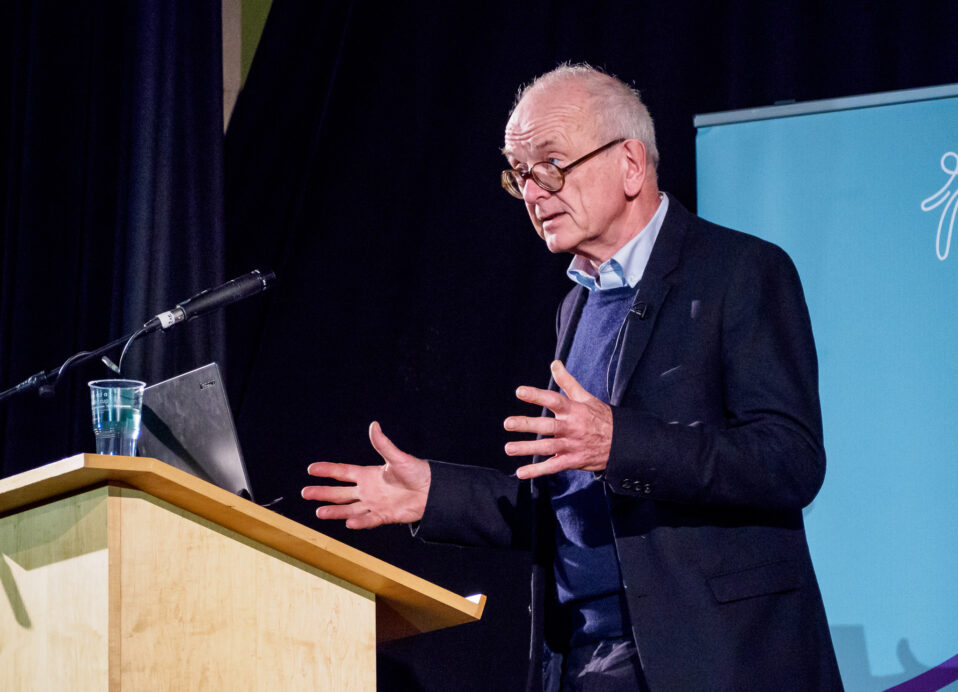
Sir Iain Chalmers left, Professor Wendy Savage centre, and Dr Henry Marsh right.

An article published in the British Medical Journal (BMJ) has called upon healthcare professionals to respect their patients’ end-of-life wishes, and ensure that the rights of those receiving care are protected during coronavirus. The article, written by My Death, My Decision’s Medical Group, states that medics should not feel pressured into providing everyone with potentially futile treatments, if the effect of that treatment would be to merely prolong their suffering. 

The co-authors of the article are MDMD’s Associate Director Colin Brewer; Sir Iain Chalmers, the co-founder of the medical research Cochrane Collaboration; Dr Phil Hammond, the acclaimed physician and broadcaster; Dr Henry Marsh, the best-selling author and neurosurgeon; Professor David Nutt, the President of the European Brain Council – and Professor Wendy Savage, winner of the BMJ’s award for outstanding contribution to health and women’s rights advocate. 

Trevor Moore chair of the campaign group My Death, My Decision said: 

‘Coronavirus has already taken the lives of tens of thousands of people, leaving their family and friends to grieve at the same time as coming to terms with a changed world. It is essential, during such a difficult time, that the virus not be allowed to rob those facing intolerable and incurable suffering of their rights to say how they’d like to be cared for as well. There has never been a time when thinking about how we’d want to be treated in the final stages of our life has mattered more; nor, a moment when doctors and nurses should feel supported for upholding the wishes of their patients. In spite of these challenging times, the respect that we show towards a patient’s autonomy remains a defining quality of our healthcare system. We are pleased so many prominent medics have voiced their desire to protect it.’

Read more

Distinguished right-to-die activist Barbara Smoker dies

Credit: Andrew Davidson, https://bit.ly/3c7koJb

My Death, My Decision was sad to learn that the celebrated right-to-die activist Barbara Smoker has died aged 97.

As a former Chair of the Voluntary Euthanasia Society (now known as Dignity in Dying), Barbara was at the forefront of several social justice movements within the UK for more than 70 years including humanism, abortion rights, prison reform, as well as being an early advocate of legal, safe, and compassionate assisted dying.

During her tenure as the Chair of the UK’s leading assisted dying organisation, Barbara edited the now landmark book: ‘Voluntary Euthanasia: experts debate the right to die’ (which featured contributions from our Associate Director Dr Colin Brewer), and resisted suggestions that a change in the law should be restricted to those with six or fewer months left to live, stating:

‘Why should the question of terminality be regarded as a relevant criterion at all? Indeed, provided pain is adequately controlled, the terminally ill patient is less likely to need euthanasia than someone whose equally distressing illness or disability is not terminal, since the latter could face many years of suffering. The two most important criteria are surely the intolerable nature of the condition and its incurability – the proper question being whether an intolerable condition is apparently incurable, not whether it is terminal’.

Dr Colin Brewer said: 

‘Throughout her life, Barbara stood up to help others and protect their rights. She was a loyal friend to the right-to-die movement and her presence will be missed by all who knew her. Barbara’s achievements stand as a testament to her character, values, and commitment towards creating a better world. The thoughts and wishes of everyone at My Death, My Decision are with her friends and family during this difficult time.’ 

‘Barbara would not have minded being characterised as a ‘tough old thing’. As well as her activism in many fields, she wrote poetry and was a regular contributor to competitions in literary journals, quite often winning them. Always surprised to have survived for much longer than she expected, she continued to attend secularist meetings and to support the original aims of the Voluntary Euthanasia Society after its successor Dignity in Dying adopted  an Oregon-style six-month limit without consulting the membership. She was open about her sexuality well before that became almost unremarkable and did not let increasing deafness have much effect on her activism. I hope it is not true that ‘they don’t make them like that anymore’ because the world badly needs people like Barbara’.

Read more

Canada moves to broaden assisted dying law

The Canadian government has proposed changing the law on assisted dying to extend access for those who are not terminally ill.

Unlike some states in the USA and Australia, under Canada’s current 2016 law, the right to request an assisted death is not restricted to those with a life expectancy of 6 months or less. Instead, adults who are of sound mind can voluntarily request assistance to die if they suffer from a grievous and irreversible condition – provided their death is ‘reasonably foreseeable’.

Some Canadian assisted dying providers are now interpreting these criteria to include those in early-stage dementia, while the person still has mental capacity. This is similar to the approach taken in Switzerland by organisations such as Dignitas and Lifecircle.

Last year the Quebec Superior Court found the requirement of a ‘reasonably foreseeable death’ discriminated against those who are incurably suffering, but not from an illness that will cause death. The Government has now proposed changes to enable those who are incurably suffering the right to request an assisted death as well, without the need for their death to be ‘reasonably foreseeable’. This would be likely to include people with complaints similar to UK campaigners Debbie Purdy, Omid, Paul Lamb and Tony Nicklinson.

The proposed law would not, however, extend to cases where someone was purely suffering from a mental illness.

The Bill also proposes a ‘waiver of final consent for eligible persons whose natural death is reasonably foreseeable and who may lose capacity to consent before MAID can be provided’. (MAID – Medical Aid in Dying, is the term used in Canada to refer to Assisted Dying.) This waiver is important as some people require such strong medication to relieve their pain as they approach death, that they lose their mental capacity as a side-effect of the medication. The current Canadian law requires them to obtain MAID, if they request it, without this level of medication, which means they have to end their life sooner than they might wish. In situations like these it seems much more reasonable for people to be able to pass all the safeguarding checks before they lose capacity due to requiring high levels of medication. This waiver may also apply to those with dementia. (See this article for further discussion of assisted dying and dementia.)

Phil Cheatle, MDMD’s Lead Campaign Commentator said:

‘This is another very welcome development from Canada. The Canadian government is rightly considering modifying its assisted dying legislation to overcome some limitations. They are attempting to carefully protect vulnerable people while at the same time providing access to an assisted death for those who want to use it when this is the only way to end their suffering. Canada should now be seen as the country to watch as an excellent example of well-considered assisted dying legislation.’

‘Those who oppose this sort of careful, evidenced-based approach are forcing many to suffer against their will at the end of their lives, or to take drastic, unregulated and possibly illegal action themselves. This is totally unacceptable in a caring, compassionate society.’

MDMD is delighted that Dr. Stefanie Green, one of Canada’s leading MAID providers and the President of the Canadian Association of MAiD Assessors and Providers, will be giving a lecture hosted by MDMD and FATE in London in April 2020. Further information and tickets are available here.

Read more

Canada forges ahead with consultation on assisted dying for the incurably suffering

Under its current rules, Canadian adults who are of sound mind can voluntarily request an assisted death, if they suffer from a grievous and irremediable medical condition, and are in a state of irreversible decline – resulting in intolerable suffering and a reasonably foreseeable death.

But, following a judgment from a court last September, the requirement of a ‘reasonably foreseeable death’, which had prevented adults with an incurable but non-life threatening illness from having an assisted death, was struck down. The decision, which was suspended until 11 March to allow the Government to appeal, ruled such a narrow restriction discriminated against those living in constant and unrelievable pain.

Deciding not to appeal the judgment, the Government has now given Canadians until 27 January to indicate whether the change in the law should be accompanied with additional safeguards, including:

A requirement that a patient has exhausted all other treatment options before requesting an assisted death
Mandatory psychological or psychiatric evaluations
Special training for doctors to assess the risk of vulnerability

Among other questions, the consultation also asks Canadians whether assisted deaths should be permitted for: patients with Alzheimer’s who indicated they wished to die prior to losing capacity, adults solely suffering from a psychiatric illness, and patients under the age of 18 but who are deemed able to make their own medical decisions.

Even without the court ruling, these questions were due for investigation in 2020 as part of a mandatory five-year review. It is expected they as well as issues such as the state of palliative care will be covered by a parliamentary committee later in June.

Robert Ince, a spokesperson for the campaign group My Death, My Decision said:

‘In any modern and compassionate society, adults who face constant and unbearable suffering shouldn’t be forced to endure unnecessary pain – regardless of how long they are expected to live. Fundamentally, they deserve a right to decide how, where, and when they die.

We warmly welcome Canada’s decision to embrace this reality and commend their commitment to ensuring the right balance between respecting autonomy and robust safeguards.

For too long, whilst progressive nations including Canada have forged ahead, Britain’s politicians have dragged their feet on assisted dying – preferring to leave it in the too-hard to resolve category. But, with public opinion at a record high ( nearly 90% favour a change in the law) and more than one person a week now travelling abroad to end their life, the time has now come for Parliament to take action.

Read more

New Guidelines for Canadian Medical Assistance to die in early stage Dementia cases

MDMD commented recently on how the current Canadian Medical Aid in Dying (MAID) legislation was now starting to be used in some early stage dementia cases. A recent 30-minute radio programme broadcast by CBC (Canadian Broadcasting Corporation) discusses another case in depth. The programme and a detailed summary are available on their website.

This is not an expansion of our law … This is a maturing of the understanding of what we’re doing. Dr Stefanie Green

Gayle Garlock was a retired university librarian who loved to read. When early stage Lewy-body dementia robbed him of his ability to read, his quality of life reduced unacceptably. For him that was intolerable suffering as reading was fundamental to who he was as a person.

Dr Stefanie Green is an assessor and provider of Assisted Dying in British Columbia. She is also the current president of the Canadian Association of MAID assessors and providers, (CAMAP).  She first met Gayle Garlock in March 2018. At that time she was unsure whether he met the conditions for assisted dying in Canada, or whether she would personally be willing to help him. She was understandably concerned that if she helped Gayle and was later found to have acted improperly she could face a 14 year jail sentence.

The more we talk about this topic … the better our deaths will be, however we want to shape them. Dr Stefanie Green

Dr Green and her colleagues at CAMAP spent many months considering the issues around MAID and early stage dementia, as it relates to the Canadian law. They have produced an insightful document providing guidelines for how to assess MAID requests from those with dementia.

The document considers the assessment of three key questions:

  • Whether the patient is in an advanced state of decline in capability;
  • Whether the patient has capacity to make the decision to have MAiD; and
  • Whether the patient’s natural death is reasonably foreseeable.

In discussing the interpretation of “reasonably foreseeable” death, the guidelines cite a legal case which concludes: “Natural death need not be imminent and…what is a reasonably foreseeable death is a person-specific medical question to be made without necessarily making, but not necessarily precluding, a prognosis of the remaining lifespan. […] In formulating an opinion, the physician need not opine about the specific length of time that the person requesting medical assistance in dying has remaining in his or her lifetime.” This shows how the Canadian law is more flexible than laws requiring a specific life expectancy estimate, such as 6 months, used in Oregon and elsewhere. Doctors have long argued that it is frequently impossible to give an accurate time prognosis. This has led to calls for a more flexible definition of “terminal illness” in some jurisdictions.

The CAMAP guidelines argue that as MAID requests will be part way through the mild phase of dementia, the life expectancy of most dementia patients requesting MAID would likely be less than 5 years, particularly in older patients. This is within the intention of “reasonably foreseeable”. In contrast, the guidelines are clear that cases of mild cognitive impairment (MCI) alone would not be accepted for MAID as not all such cases will progress to dementia and the rate of transition is somewhat uncertain. The death in cases of MCI alone is therefore not “reasonably forseeable”.

The guidelines carefully consider at what point a patient requesting MAID is in an “advanced” state of decline, while still retaining sufficient mental capacity to make a valid MAID request. This is a difficult and delicate issue. The guidelines first point out that for a previously highly intelligent person who is now struggling with the cognitive demands of everyday life, advanced decline is clear in terms of the relative loss of ability. However it points out that “advanced” should not be interpreted only as relative to the pre-dementia baseline, but also in terms of how close the patient is to losing capacity due to dementia. The recommendation is that in the case of a patient whose MAID request is refused solely because they are not deemed to have reached an advanced state of irreversible decline in capability, the patient should be reviewed periodically by an appropriate clinician. When it is believed that they are close to losing capacity the clinician should inform the patient that this is the case. The patient can then decide whether to request MAID or delay, on the understanding that delay may result in their losing sufficient capacity and therefore no longer being eligible for MAID.

The guidelines end with three scenarios showing how a safe assessment can be reached.

After studying the guidelines MDMD’s Lead Campaign Commentator Phil Cheatle said:

“It is very gratifying to see medical professionals in Canada working to establish safe guidelines for interpreting the MAID law in dementia cases. This is essential to ensure safe working practice. Both medical professionals and right-to-die campaigners in other jurisdictions have much to learn from the work CAMAP is doing.”

With this framework in mind, in Spring 2019 Dr Green was open to reconsidering Gayle Garlock’s case. He requested a second assessment. Dr Green found that although his condition had deteriorated he still had mental capacity and was also suffering intolerably. She approved his MAID application. Gayle chose to wait until the end of the summer, but after a fall in June he decided to request MAID in July.

Dr Green repeatedly asked Gayle whether it was his choice or his wife’s or his children’s. His consistent answers on several occasions convinced Dr Green that he had not been persuaded by anyone else. Gayle’s assisted death took place in his home on 26th August, following a final check of his mental capacity and wish for an assisted death.

In making her assessments, Dr Green interviewed Gayle on his own. This ensured that there was no one else influencing or prompting his response. It would perhaps be good practice for a video recording of the crucial assessments to be made, with the patient’s knowledge and consent, should anyone question the decision at a later stage, and for the doctor’s personal protection.

MDMD is delighted that Dr Green has agreed to be the speaker at our next meeting for our members and supporters in London in April 2020.

Read more

Parliamentary debate on the UK Assisted Suicide Law

On 4th July 2019 the House of Commons had the first opportunity to debate assisted dying since the Marris Bill failed in September 2015. The debate can be seen in full here. Prior to the debate MDMD circulated this briefing to MPs.

Nick Boles MP opened the debate by contrasting the death of his father, who ended his life by exercising his right to refuse life sustaining treatment, with that of Geoff Whaley who needed the currently illegal assistance of others for the good death he wanted. Nick Boles explained that “the purpose of today’s debate is not to propose a new law on Assisted Dying, but to understand the effect of the current law… It is only when we have fully understood all the different ways in which the current law impacts the British people that we should consider returning to the question… of what kind of change in the law might be justified.” He then called on the Lord Chancellor and the Secretary of State for Justice to initiate a formal call for evidence on the impact of our existing laws on Assisted Dying. He cited the very limited ability of parliament to gather evidence as a primary reason for this request.

The debate considered many points of view. Several MPs gave moving speeches describing very bad deaths that would have been vastly better had a compassionate Assisted Dying law been in force.  Paul Blomfield MP movingly described his father’s premature unassisted suicide.  “The current law forced my father into a lonely decision and a lonely death.” Although both he and his father strongly support improved end of life care and the hospice movement, he pointed out that “no hospice can enable everybody to die with the dignity that they would want”.  It was soon after a palliative care consultation that his father took the decision to end his life while he still could, without implicating anyone else. “If the law had make it possible he could have shared his plans with us. Knowing that he could, with support, go at the time of his choosing, would have enabled him to stay longer.”

Sir Norman Lamb MP gave further moving examples from his constituents which demonstrate ways in which the current law is failing. One case was a woman’s failed suicide which put her daughter in an impossibly difficult position as her Lasting Power of Attorney. He ended: “it is the individual and not the state who should decide, in a period of terminal illness, whether they bring their life to an end, and that is why the law should change.”

Crispin Blunt MP made the important observation that “The hard truth is that more of us are going to have to grapple with the pain and indignity of crippling progressive infirmities in later life and if we don’t change the law, even more people than the current 1 every 8 days may travel to Switzerland for an assisted death.”

Other MPs highlighted the unfairness of the current law, as the option of a medically assisted death in Switzerland is only available to those who can afford the cost; who are capable of handling the bureaucratic obstacles and who are capable of traveling to Switzerland, often earlier than they would wish.

Steve McCabe MP made a speech in which he referred to the Assisted Dying Coalition and the MDMD poll results. Although he voted against the Marris Bill, he believes the issue needs to be considered by parliament again. He expressed his concerns over a 6-month life expectancy restriction citing the difficulties doctors have in predicting this, and the suffering people it unfairly excludes. He explained that he was very moved by the case of Paul Lamb, saying “I think we need to focus on the quality of life, the capacity for life, and the rational sound judgement of a person who makes such a decision. Life expectancy in itself doesn’t tell us anything about suffering. So I think we should be considering Assisted Dying both in the context of terminal illness but also suffering and a lack of meaningful life.”

Those MPs opposed to changing the law referred to the traditional concerns: the protection of vulnerable people; the need for better palliative care; the views of disability groups; and religious sanctity of life.

Early on in the debate Lyn Brown MP intervened in Nick Boles’ opening speech to describe her mother’s death. She feared that if Assisted Dying had been available her mother would have spent her final months consumed by guilt and anxiety about when she should choose that option because she would have worried about the effect on her close family, the cost of her care, and the NHS resources she was taking up. Nick Boles responded to this by saying that any law would have multiple checks that the requestor was not pressurised by others to make their request. He described the checks that Dignitas make that ensure people are making their choice themselves.

This aspect of the debate is a clear example of the need for a careful gathering and assessment of evidence in the way Nick Boles requested. The concerns of vulnerability and coercion are very important. MDMD hopes that evidence gathering will address:

  • Evidence of the extent of coercion in other jurisdictions regarding requests for medically assisted deaths.
  • Any evidence of coercion in the working of the current law which allows people to refuse life-sustaining treatment to end their lives. (For example, Nick Bole’s father or the case of the “champagne suicide“.) Such people are just as open to coercion to end their life as others who would be eligible for assisted dying under an appropriate law. How do we  currently manage the risk of them being “consumed by guilt and anxiety” over whether or when to choose to refuse treatment as a means of ending their life? Is there any evidence to suggest that the same approach would be inadequate were Assisted Dying legalised?
  • Evidence of how reliably sufficient mental capacity is assessed in legislations which permit various forms of assisted dying, to ensure that anyone requesting an assisted death is making their own safe decision, free from undue persuasion, on a matter as serious as choosing to take their own life.

Some MPs referred to the opposition to Assisted Dying of most religious organisations, saying how they were in favour of Assisted Dying despite their own religious belief. Noel Conway‘s MP Daniel Kawczynski, a Roman Catholic, summed these views up when he said “Perhaps the Church doesn’t always get everything right when it comes to how human beings behave, interact, and ultimately decide to die.”

A number of MPs, including Vince Cable, stated that they had changed their mind on the issue since the Marris Bill debate. In closing the debate Nick Boles said: “I have changed my mind about this issue. Many people have changed their minds about this issue. I hope that more people will change their mind about this issue so that we can get on and change the law and make this country a more humane place for people to live and die.” These are sentiments that MDMD wholeheartedly endorse, but there is still a very long way to go.

Read more

Another incurably suffering man launches new assisted dying challenge

Phil Newby, 48, who suffers from advanced Motor Neurone Disease, has announced his intention to bring a new legal case challenging the UK’s law on assisted dying. 

Phil, who was diagnosed with the progressive neurological condition in 2014, is unable to walk and has lost the ability to control movement in his arms and hands. He argues that the UK’s law, which prohibits anyone from assisting him to end his own life, is incompatible with his fundamental human rights to private life and against inhumane treatment. Phil proposes to change the law so as to permit mentally competent adults who are either facing incurable suffering or have a life-shortening progressive degenerative condition which will ultimately lead to death, to request a dignified death. 

Under the 1961 Suicide Act, anyone found guilty of assisting another to end their life could face a maximum of fourteen years’ imprisonment. In 2015, the House of Commons debated but rejected a proposal from Rob Marris MP, which would have legalised assisted dying for those who are likely to die within six months, by 330 votes to 118. 

Phil Newby’s case differs from the proposed case that Paul Lamb, My Death, My Decision’s patron, intends to bring forward, as Phil intends to follow the successful approach which overturned the law on assisted dying in Canada and was intended to underline in the landmark Omid T case, before he ended his life at Lifecircle in Switzerland. This means that, if granted permission, the UK’s most senior judges will be invited to comprehensively review the evidence on assisted dying, before ruling on its compatibility under the Human Rights Act 1998.  

Phil Newby has issued a letter to the Justice Secretary and received a response, but is asking for support from the public to cover experts’ expenses and legal fees before he can progress. He has already raised over £18,000.

Phil Newby said:

“I’ve come to accept that MND will eventually kill me, but I’m determined to enjoy life and contribute to my family for as long as I possibly can. When the time comes, I would like compassionate medical help to die in peace at home, with my family. Instead, my wife and girls face watching me starve, choke or suffocate to death, because of our inhumane and outdated laws that criminalise assisted dying.

It doesn’t have to be this way. Other countries have introduced a compassionate and common-sense assisted dying legal framework, with safeguards. 

This case will be the biggest fight of my life, and I can’t do it alone. I’m asking the public to support me by sharing my story and donating to our legal fund through CrowdJustice. Our legal strategy seems to be winning plaudits from members of the public, journalists, and commentators alike, because it simply asks for our senior judges to carefully examine the evidence for and against assisted dying. Together, we can make a change.” 

Trevor Moore, Chair of My Death, My Decision said:

“Now more than ever, as society has become increasingly adept at extending the length of life, but not always its quality, the right to decide the manner and timing of your own death should be seen as a fundamental human right. We welcome Phil Newby’s decision to challenge our country’s archaic stance on assisted dying, and stand up for those who are of sound mind and either terminally ill or incurably suffering. We don’t consider terminal illness alone to be a reliable measure of someone’s suffering or quality of life, nor believe that the option of a peaceful, painless, and dignified death should be limited to someone with six-months left to live. We welcome this as yet another step forward in our country’s long journey towards a compassionate change in the law.”

Saimo Chahal QC (Hon), Solicitor, Bindmans LLP said:

“It is vital that the courts should consider Phil’s case and the legal arguments for and against allowing a law change so as to come to an informed and balanced decision. This has not happened to date and the time is ripe for the issues which Phil raises to be confronted.  Expert evidence should be allowed with cross examination of all experts both for and against Phil’s claim so that the arguments can be fully tested in court as much of the debate in this area has focused on unsubstantiated and emotive stories about the harm that a law change would result in, without the evidence to back up these claims.” 

He is being represented by Saimo Chahal QC (Hon), Partner, Bindmans LLP, and counsel  Paul Bowen QC of Brick Court Chambers with Jennifer Macleod and Adam Wagner of Doughty Street Chambers.

Read more

MDMD welcomes the news that patron, Paul Lamb, intends to bring a new right-to-die case

Paul Lamb, who previously took his case for the right to die to the Supreme Court, is now seeking to bring forth a new attempt to change the UK’s law on assisted dying.

(Sourced from MDMD’s co-founder of the assisted dying coalition, Humanists UK: https://humanism.org.uk/2019/05/07/paul-lamb-to-bring-new-legal-case-for-the-right-to-die/)

Paul Lamb, 63, was severely injured in a car accident in 1990 and has no function below his neck apart from limited movement in his right hand. He requires around the clock care and is in constant pain. Mr Lamb does not want to end his life yet, but knows that as he gets older he will inevitably need assistance to die. He argues that the current law – which prohibits any assistance and carries up to fourteen years imprisonment if someone is convicted – breaches his human right to a private and family life.

Five years ago, I asked our courts to give me the right to control my own death and they told me to wait. Since then I have watched and waited as new evidence has emerged and progressive countries have given millions of others the choice I have asked for. And still the UK Parliament has done nothing. I have no option but to ask the Court to intervene again. I need them to help me, and many others in my position, to end this cruel and discriminatory law” – Paul Lamb

Alongside Jane Nicklinson, the widow of locked-in sufferer Tony Nicklinson, Paul Lamb previously challenged the UK’s 1961 Suicide Act by taking a case to the Supreme Court in 2014, and the European Court of Human Rights. However, whilst the Supreme Court reached a split verdict on the legality of the UK’s prohibition in 2014, including a notable dissent from the now President of the Supreme Court, Lady Hale, it held that Parliament must be afforded an opportunity to debate the issue before the courts might decide to change the law.

But then in 2015, the House of Commons rejected a proposal from Rob Marris MP which would have legalised assisted dying for those who are likely to die within six months, by 330 votes to 118.

Assisted dying is now legal in this form in five countries, most recently Canada, and is also legal for terminally ill people specifically in one country, eight US jurisdictions, and soon to be in the Australian state of Victoria.

Recently, new figures released by the Assisted Dying Coalition, of which Humanists UK is a member, also found that more than one person a week now travels to Switzerland to end their life. New Research from My Death, My Decision also indicates that 88% of people in England and Wales favour assisted dying for those who are incurably suffering, in at least some situations.

Announcing his intention, Paul Lamb said:

“I am paralysed from the neck down and live in a state of constant pain. In the future my suffering will inevitably become too much to bear. When that happens, I want to be able to control and choose the circumstances of my death. As the law stands, my only option would be to die through the inhumane process of dehydration and starvation. This situation cannot be allowed to continue.”

Commenting on the announcement from My Death, My Decision’s Patron, MDMD’s Chair Trevor Moore said:

“Throughout his life, Paul Lamb has stood up for the rights of others, and today he has done so once again. His case encapsulates what the campaign for a fairer and more compassionate law on assisted dying is about.”

“In his judgement on the Tony Nicklinson case, Lord Neuberger remarked there was “significantly more justification in assisting people to die if they have the prospect of living for many years a life that they regarded as valueless, miserable, and often painful, than if they have only a few months left to live.” We applaud Paul’s bravery in taking this case forward and hope that compassion and respect for his freely reached decision will prevail.”

Read more